


Small Kitchen, Big Possibilities: How to Create More Space Without Remodeling
A small kitchen can sometimes feel like a daily puzzle.
There is never enough countertop space.
Cabinets become crowded quickly.
One open drawer blocks another, and preparing a simple meal seems to require moving half the kitchen.
But size is not the only factor that determines how well a kitchen works.
A thoughtfully organized small kitchen can feel more practical and comfortable than a larger space filled with unused tools and inefficient storage.
The goal is not to fit more inside.
It is to make better use of what is already there.
Begin With Your Real Routine
Before purchasing organizers, observe how you actually use the kitchen.
Which tools do you reach for every day?
Which appliances remain untouched for weeks?
Where do items naturally collect?
Which tasks feel the most difficult?
Your answers reveal where the kitchen needs improvement.
A beautiful organization system is not helpful if it does not support the way you cook.
Protect Your Countertop Space
In a small kitchen, the countertop is valuable working space.
Try to keep only frequently used items visible.
A coffee maker that is used every morning may deserve a permanent location. A large appliance used once a month may be better stored in a cabinet or another room.
Consider removing:
- decorative items that limit work areas
- duplicate utensil containers
- unopened mail
- rarely used appliances
- excessive dishware
- products without a clear purpose
A clear countertop makes the entire kitchen feel larger and creates room for actual preparation.
Think Vertically
When floor and counter space are limited, walls and cabinet doors become important storage opportunities.
Depending on your kitchen, vertical solutions may include:
- wall-mounted rails
- magnetic knife holders
- under-shelf baskets
- cabinet-door organizers
- stackable pantry shelves
- hanging hooks
- narrow rolling carts
Use vertical storage carefully.
The goal is to improve accessibility without making the room feel visually crowded.
Choose Nesting and Multipurpose Products
Products that fit inside one another can save valuable cabinet space.
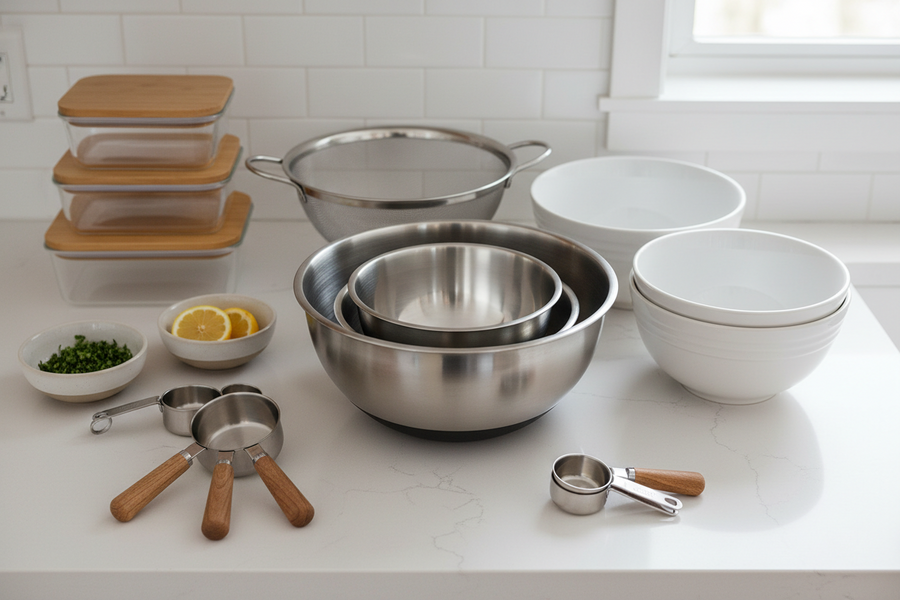
Nesting mixing bowls, measuring cups, colanders, and food containers reduce the amount of room required for everyday essentials.
Multipurpose tools can also replace several single-use gadgets.
A quality chef knife may eliminate the need for numerous specialty cutters. A durable mixing bowl can be used for preparing, serving, and storing food.
In a small kitchen, every product should earn its place.
Organize Drawers by Frequency
The best location for an item depends on how often it is used.
Keep daily essentials in the easiest-to-reach drawers and cabinets.
Less frequently used tools can be stored higher, lower, or farther away from the main preparation area.
A practical arrangement may include:
- daily utensils near the stove
- knives and cutting tools near the prep area
- measuring tools near mixing bowls
- food storage near the refrigerator
- cleaning products beneath the sink
This creates simple work zones even within a compact room.
Reduce Duplicate Items
Small kitchens become crowded when several products perform the same task.
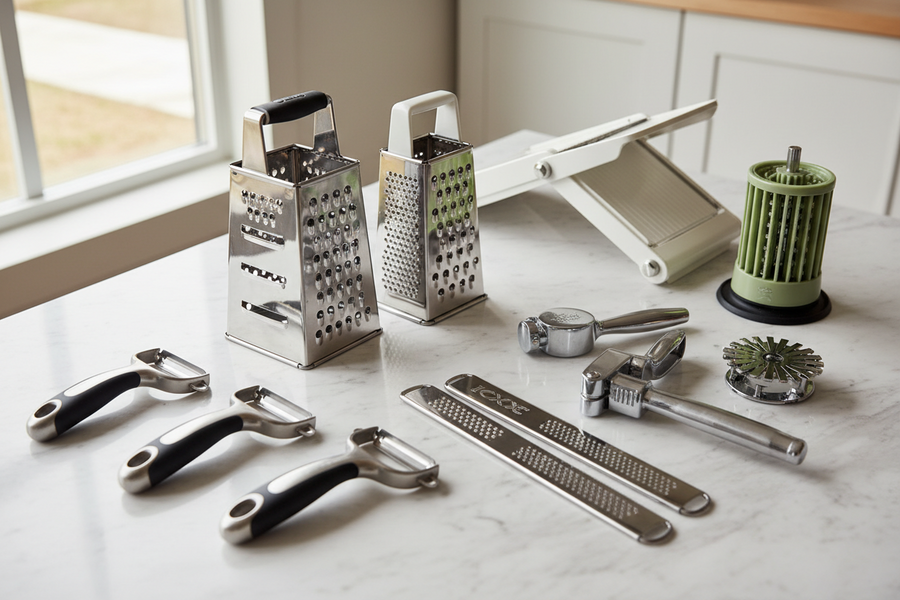
You may not need six spatulas, four peelers, three can openers, or an entire collection of mugs that rarely leave the cabinet.
Keep the pieces that work well and feel comfortable to use.
Removing unnecessary duplicates gives useful products room to breathe and makes cabinets easier to maintain.
Use Food Storage Strategically
Bulky packaging can consume more pantry space than the food itself.
Transferring frequently used dry ingredients into appropriately sized containers can improve visibility and stacking.
However, avoid transferring everything simply for appearance.
Focus on ingredients that:
- are difficult to reseal
- are used frequently
- benefit from airtight storage
- create clutter in their original packaging
- are easier to measure from a container
Good storage should improve function, not create additional work.
Leave Some Empty Space
It may seem strange to leave empty space in a small kitchen.
But completely full cabinets are difficult to use.
A little open space allows items to be removed and returned without rearranging an entire shelf. It also gives your kitchen flexibility when groceries arrive or new needs appear.
Empty space is not wasted.
It is part of a functional storage system.
Final Thoughts
A small kitchen does not need to limit how well you cook or how much you enjoy the space.
By protecting work surfaces, choosing versatile essentials, and organizing products around your real routine, you can create a kitchen that feels calmer, more capable, and surprisingly spacious.
At PurePrep Kitchen, we believe better design begins with making everyday life easier—regardless of the size of your home.
Prepare Better. Live Easier.